
Product guide
Network Live Monitor for Windows: what we built and how it works
Network Live Monitor is the Windows network monitoring tool we built for a direct operational question: which authorized devices are online right now, and what changed while nobody was watching? It checks the IP devices you choose, presents their status in one local dashboard, alerts on outages and recoveries, and keeps a useful event trail on your PC.

Project at a glance
- Monitor up to 500 reachable IP devices from a 64-bit Windows 10 or Windows 11 PC.
- See online or offline state, response time, uptime, failures and recent status changes.
- Receive Windows notifications for outages and recoveries, with optional sound controls.
- Keep the latest seven days of events in the app, archive older records and export event reports to CSV.
- Install free from Microsoft Store or use the direct EXE published in the official GitHub release.
Why we built a focused Windows network monitor
Small IT teams, branch offices and home labs often do not need a large monitoring platform just to know whether a router, server, printer or storage device is responding. Manual ping checks only answer the question for one moment, and waiting for somebody to report a problem adds avoidable delay.
We designed Network Live Monitor as a focused desktop utility. The app keeps checking the devices you authorize, makes failures visible, records when a device goes down or comes back, and stays understandable without a separate server or cloud account.
How Network Live Monitor works
Add a device name and IP address, then the app sends scheduled ICMP echo checks from your Windows PC. The result becomes a clear online or offline state in the dashboard. Response time, uptime, failure counts, the last successful check and the latest state change remain visible without opening separate tools.
Scan interval, timeout and alert behavior can be adjusted for the network you manage. Monitoring continues after temporary network errors, while concurrency limits and bounded logs keep long-running use controlled.
- Current status: online or offline, with the latest response time.
- Reliability context: uptime percentage and recorded failures.
- Timeline: last online, last offline and last-change timestamps.
- Activity: a live clock and scan counter confirm that checking is active.
Which devices can it monitor?
Network Live Monitor can check a reachable device that answers ICMP echo requests. Common examples include routers, servers, switches, wireless access points, printers, NAS devices, DNS servers, IP cameras and other equipment with an IP address.
Offline alerts, recovery notices and a useful event history
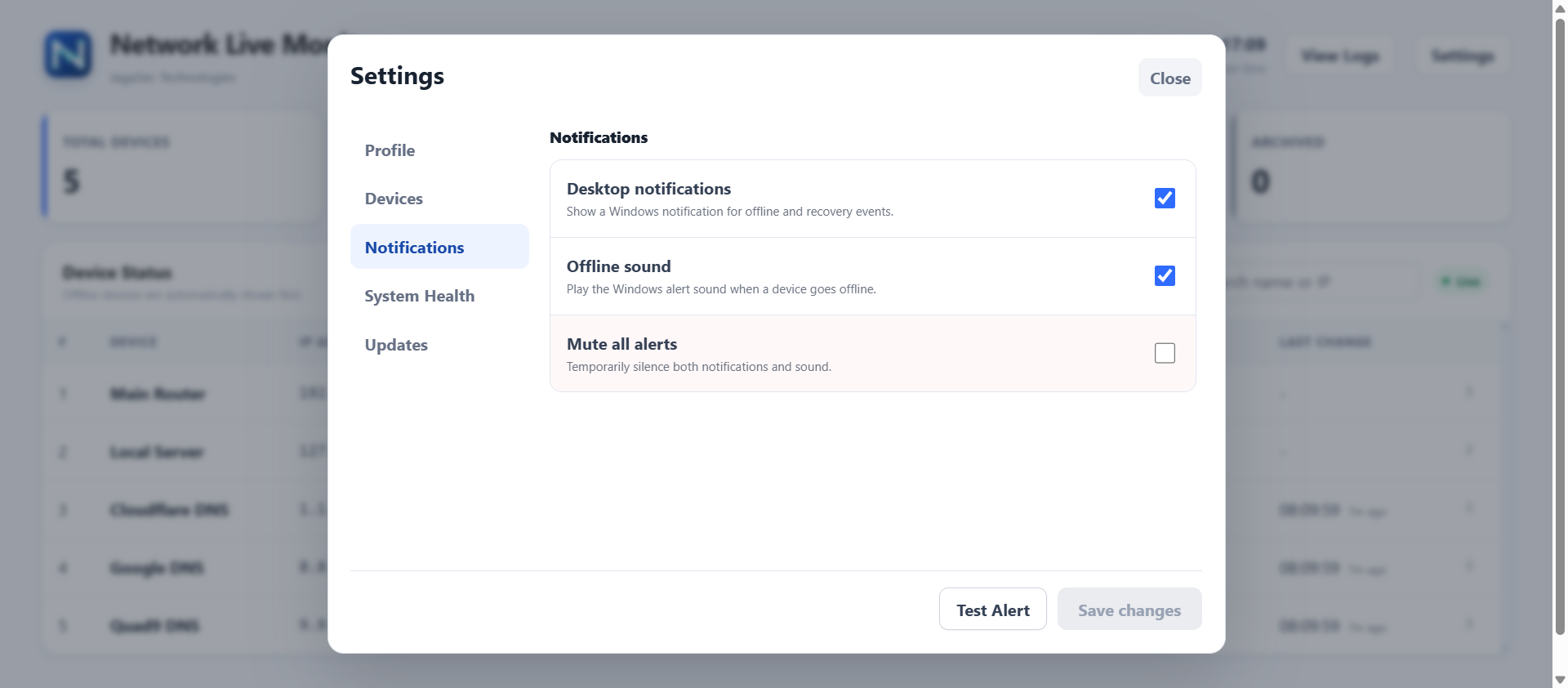
A status screen is most useful when it also tells you what changed. Network Live Monitor can show a Windows desktop notification when a device stops responding and another when it recovers. Sound alerts are optional, notifications and sound have separate controls, and master mute provides a quick quiet mode. A built-in test action lets you verify the notification setup before depending on it.
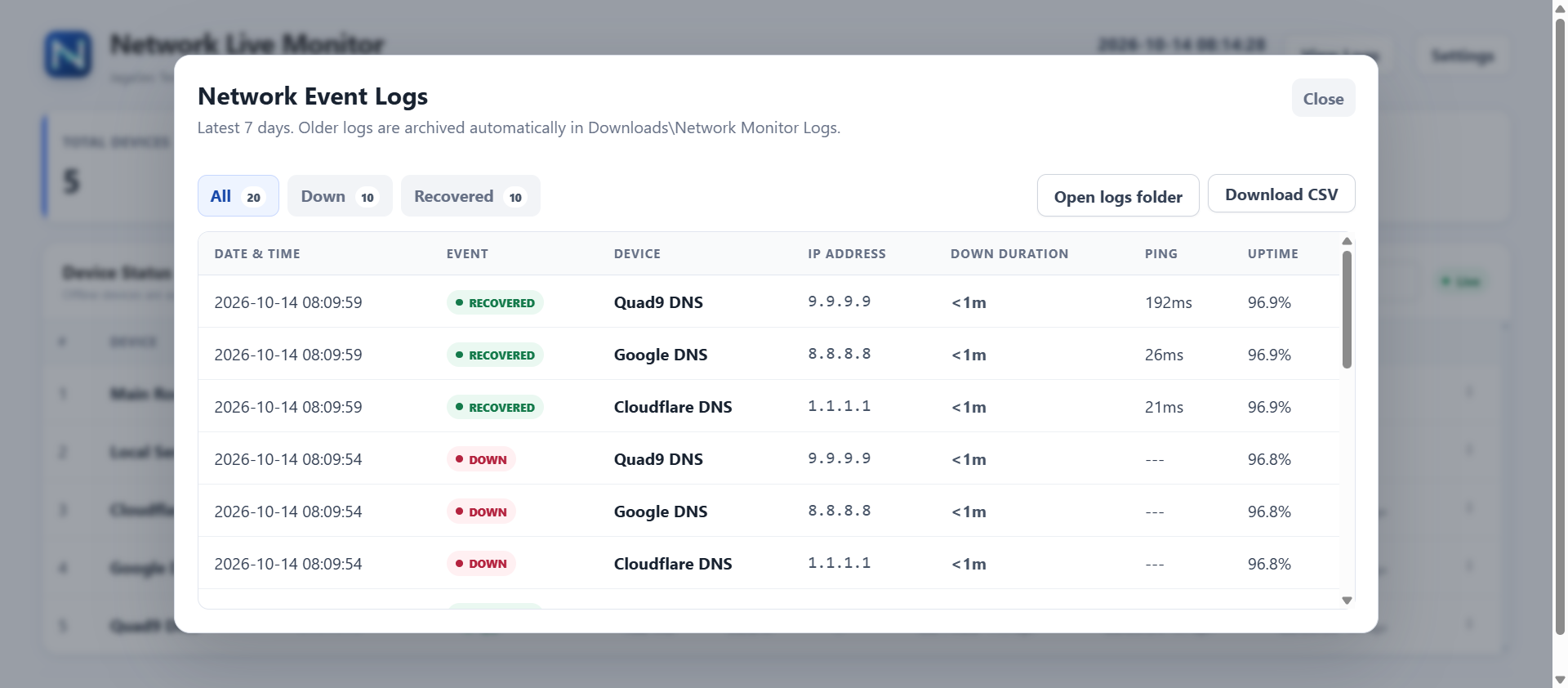
The event log shows the latest seven days of outage and recovery records, including downtime where available. You can filter the view, export records to CSV and open the archive folder directly. Older records are automatically archived under Downloads\Network Monitor Logs.
Your monitoring data stays on your Windows PC
No JagaSec account, cloud monitoring service, subscription or product key is required. Your device list, settings and monitoring history stay on the PC where Network Live Monitor runs. The app does not send telemetry; it contacts the IP addresses you add for monitoring and the release channel when you request an update check.
This local model reduces setup and keeps operational records under your control. It also means the monitoring PC must remain powered on and connected to the relevant network for checks and alerts to continue.
Install Network Live Monitor for Windows
Use Microsoft Store for Microsoft-managed delivery and updates, or download the direct installer from the public GitHub release.
Microsoft Store or GitHub: which download should you choose?
Both channels provide the same Network Live Monitor version. The difference is how Windows receives and maintains the app.
| Install channel | Choose it when | Update and trust model |
|---|---|---|
| Microsoft Store Recommended | You want the simplest install experience and managed app delivery. | Microsoft-managed signing and Store updates. |
| GitHub release Direct EXE | You need a standalone installer or want to inspect the public release record. | The current EXE is not Authenticode-signed, so Windows SmartScreen may show a warning. |
For the current links and release integrity information, use the official Network Live Monitor download section.
Set up your first devices
1. Install from your preferred channel
Choose Microsoft Store for the recommended path, or use the public GitHub release when you specifically need the direct installer.
2. Add only devices you are authorized to monitor
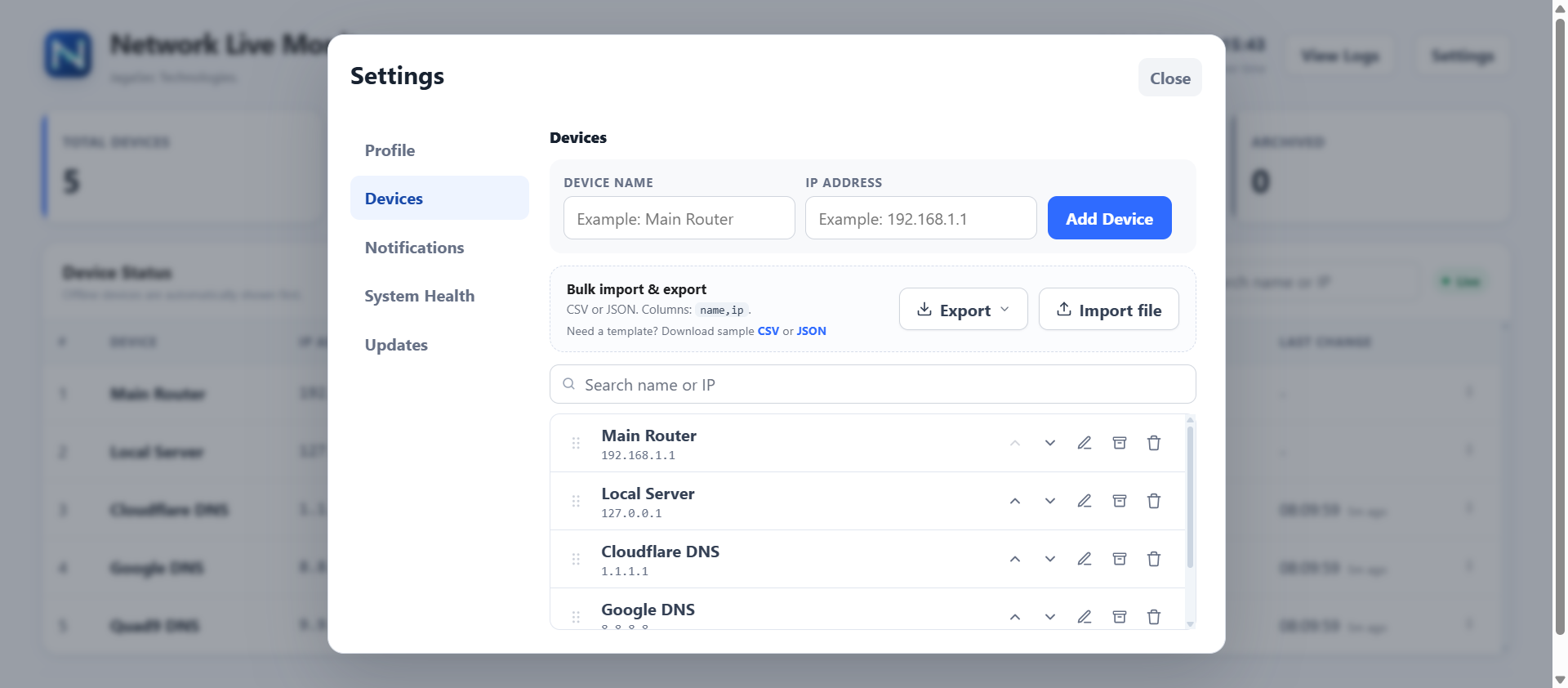
Open Settings > Devices and enter a device name and IP address. For a longer inventory, bulk import a CSV or JSON file. Duplicate IP addresses are skipped and invalid rows are reported.
3. Confirm the monitoring behavior
Check that devices answer from the monitoring PC, set the interval and timeout for your environment, then use the test alert control to confirm Windows notifications and sound.
4. Review events instead of relying on memory
Use the event log to investigate recent changes and export CSV records when an outage needs to be documented.
Where the app fits
Network Live Monitor is useful when the primary need is straightforward reachability and outage awareness on Windows: a small office watching shared infrastructure, a branch team checking local equipment, a lab tracking test devices, or an administrator who wants a dedicated status screen. It is not a replacement for application performance monitoring, packet analysis or a multi-site enterprise observability platform.
Within the JagaSec product suite, it complements IT Asset Management: one product helps maintain the asset record, while Network Live Monitor focuses on whether reachable network devices are responding now.
Frequently asked questions
What is Network Live Monitor?
It is a Windows application from JagaSec that checks authorized IP devices, shows online or offline status, response time and uptime, and records status changes in a local event history.
Which Windows versions does it support?
Network Live Monitor supports 64-bit PCs running Windows 10 version 1809 or later and Windows 11.
Does it require an account?
No. The app runs locally without an account, subscription or product key. Its device list, settings and monitoring history stay on the Windows PC where it runs.
Can it monitor a device that blocks ping?
No. The current monitor uses ICMP echo checks. If a device or firewall blocks those requests, it can appear offline even when another service on the device is available.
Where can I download it?
Install it free from Microsoft Store, or choose the current direct EXE from the official download section. Microsoft Store is recommended for managed signing and updates.